
Tim Baldwin
Talk: The Very Essence of Language Models is Uncertainty
Tim Baldwin is Professor of Natural Language Processing at Mohamed bin Zayed University of Artificial Intelligence (MBZUAI), in addition to being a Melbourne Laureate Professor in the School of Computing and Information Systems at The University of Melbourne, and Co-founder and Chief Scientist of startups including LibrAI (focused on AI safety) and Examn AI (focused on dialogue-based candidate profiling). At MBZUAI he has also held positions including Provost, Associate Provost, and Foundation Chair of the Department of Natural Language Processing.
Tim completed a BSc(CS/Maths) and BA(Linguistics/Japanese) at The University of Melbourne in 1995, and an MEng(CS) and PhD(CS) at the Tokyo Institute of Technology in 1998 and 2001, respectively. He joined MBZUAI at the start of 2022, prior to which he was based at The University of Melbourne for 17 years. His research has been funded by organisations including the Australian Research Council, Google, Microsoft, Amazon, Xerox, ByteDance, SEEK, NTT, and Fujitsu. He is the author of over 500 peer-reviewed publications across diverse topics in natural language processing and machine learning, and the recipient of a number of awards at top conferences.
Angela Yao
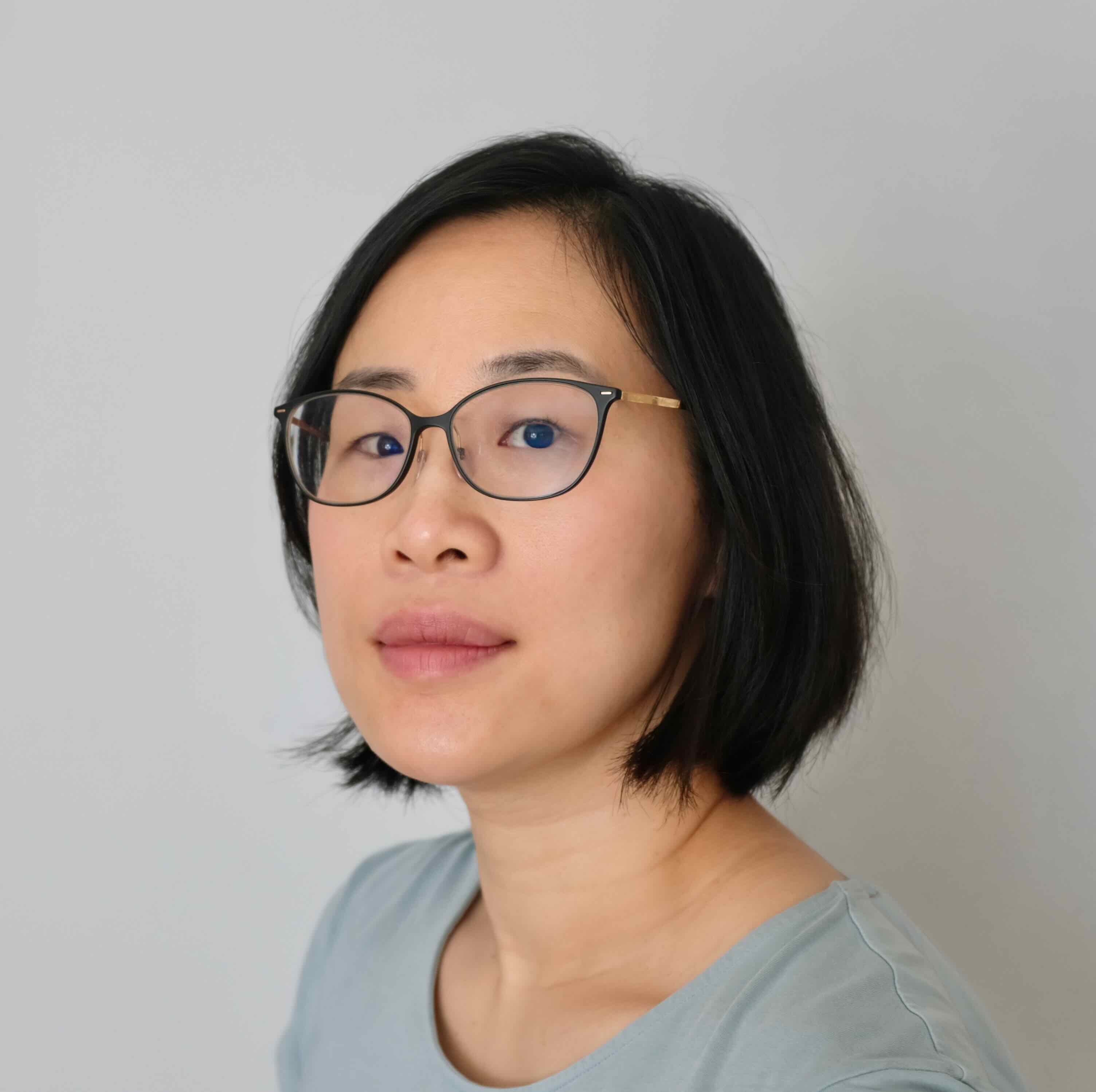
Talk: Closing the Training-Testing Gap in Autoregressive Generation
Abstract: Autoregressive models generate one step at a time, conditioning each step on what they have already produced. They are trained on clean, ground-truth histories but run on their own, so early errors become the context for everything that follows. This training-testing gap is an old problem. Recurrent sequence models knew it as exposure bias, and imitation learning faces the same issue as compounding error in behaviour cloning. Remedies have ranged from training on the model's own predictions to reinforcement learning on self-generated rollouts. The gap resurfaces in autoregressive image and video generation, and most visibly in video world models, where errors accumulate over long horizons. This talk shows where the gap enters a modern visual generation pipeline: the tokenizer, the training objective, post-training and sampling. Drawing on recent work from my group, I discuss which classical remedies carry over, what is new for visual generation, and what the gap implies for world models that must learn from their own predictions.
Angela Yao is a Dean's Chair Associate Professor in the School of Computing at the National University of Singapore, where she leads research on human-centric computer vision and video understanding. She has received Singapore's NRF Investigatorship (2026), NRF Fellowship for AI (2019), and the German Pattern Recognition Award (2018). She completed her PhD at ETH Zurich and previously held a faculty position at the University of Bonn. Angela will serve as Program Chair of CVPR 2027 and ICCV 2029.
Subbarao Kambhampati
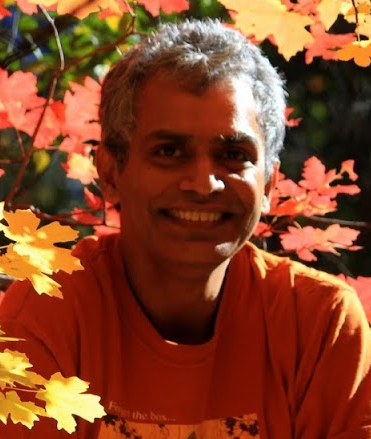
Subbarao Kambhampati (Rao) is a Professor in the Department of Computer Science and Engineering at Arizona State University, where he has been a faculty member since 1991. He is a Fellow of AAAI, AAAS, and ACM, and served as President of AAAI (the Association for the Advancement of Artificial Intelligence). His research focuses on human-aware AI systems, including planning, decision-making, and the challenges of integrating AI with human collaboration. He has received numerous awards including multiple Google Research Awards, an IBM Faculty Award, and the 2025 AAAI/EAAI Patrick H. Winston Outstanding Educator Award. He served as Program Chair of AAAI 2005 and General Chair of IJCAI 2016.

Karin Verspoor
Karin Verspoor is a Professor and Dean of the School of Computing Technologies at RMIT University in Melbourne, Australia. She is a Fellow of the Australian Academy of Technological Sciences and Engineering (ATSE) and of the Australasian Institute of Digital Health. Her research primarily focuses on the use of artificial intelligence methods to enable biological discovery and clinical decision support, through extraction of information from clinical texts and the biomedical literature and machine learning-based modelling.
Karin previously served as Director of Health Technologies and Deputy Head of the School of Computing and Information Systems at the University of Melbourne, as Scientific Director of Health and Life Sciences at NICTA Victoria Research Laboratory, in the Computational Bioscience program at the University of Colorado School of Medicine, and at Los Alamos National Laboratory. She also spent five years in start-ups during the US tech boom, where she helped design an early artificial intelligence system. She holds a PhD in Cognitive Science and Natural Language from the University of Edinburgh.
Junchi Yan
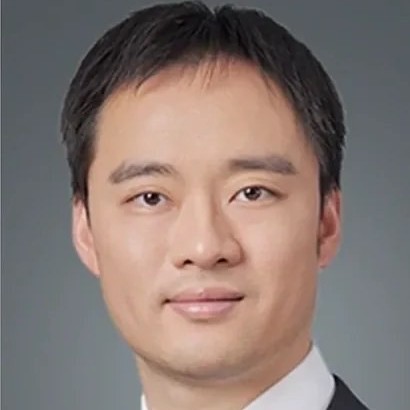
Junchi Yan is a full professor with the School of Artificial Intelligence, Shanghai Jiao Tong University, Shanghai, China. He was once a research staff member with IBM Research and an affiliated researcher with AWS AI Lab. His research centers on machine learning, with intersection to many areas especially math and quantum. Prof. Yan is an IAPR Fellow, a recipient of the IEEE CIS Outstanding Early Career Award and the IEEE Computer Society AI's 10 to Watch, and in 2025 was elected the co-first ICML board member from mainland China. He serves on the editorial boards of IEEE TPAMI and JMLR and once as senior area chair for ICML, NeurIPS, and the Program co-Chair for ACM Multimedia 2026.